Mid-Qing Dynasty Tea-Dust Glaze Water Chestnut Vase


Category:
Category:
Mid-Qing Dynasty Tea-Dust Glaze Water Chestnut Vase
Catalog No.: 473
Era: Mid-Qing Dynasty
Collection Name: Mid-Qing Dynasty Teadust Glaze Water Chestnut Vase
Specification: Height 27
Starting Price: 300000

This piece has a straight mouth, long straight neck, sloping shoulders, a flattened globular body, tapering towards the base, with a ring foot approximately one centimeter high, and the foot flares slightly outwards, with the body shaped like a water chestnut. The water chestnut bottle is one of the traditional forms of Qing imperial porcelain, originating in the Kangxi reign and particularly flourishing during the Qianlong reign. The straight neck is relatively thick, with variants of everted or straight mouths, and the body is always flattened and rounded, shaped like a water chestnut, full of aesthetic appeal. This piece has a full and proper form, with its center of gravity lowered, appearing more plump and generous. The entire body is covered with tea-dust glaze, the glaze surface is smooth and lustrous, and the glaze color is even and pure. Tang Ying's "Chronicles of Porcelain Production" records three varieties of Changguan glaze: snake-skin green, eel yellow, and yellow speckles. The tea-dust glaze of this piece is moist and lustrous, with an even and deep color, just as praised in "Tao Ya": "The exquisite texture of tea-dust glaze, like scattered mud particles in water, gradually spreads and gathers at the base, surrounding it, exactly like the flowing posture of a fresh fish's belly skin, gaining unique charm beyond the kiln transformation." Upon closer inspection, this bottle's shape is dignified and regular, its glaze quality and color are serene, fully displaying grandeur and elegance, providing such an experience, truly deserving of its reputation as a fine product of the Qianlong imperial kiln. Tea-dust glaze was originally named Changguan glaze, monopolized by the Jingdezhen Imperial Kiln during the Ming Dynasty. During the Qing Yongzheng and Qianlong periods, it was an innovative creation by Tang Ying, the superintendent of the imperial kiln, based on black-glazed wares produced in Cizhou kilns during the Ming Dynasty. Its glaze color is stable, appearing solemn and steady due to its opacity, and forming yellow-green variations due to kiln transformation, making it elegant and exquisite. Refer to: Beijing Poly Auction 2023 Spring Art Auction, Qing Qianlong.
Keywords:
秋实中国古董珍玩专场
Porcelain
Upcoming auctions

Waiting for auction
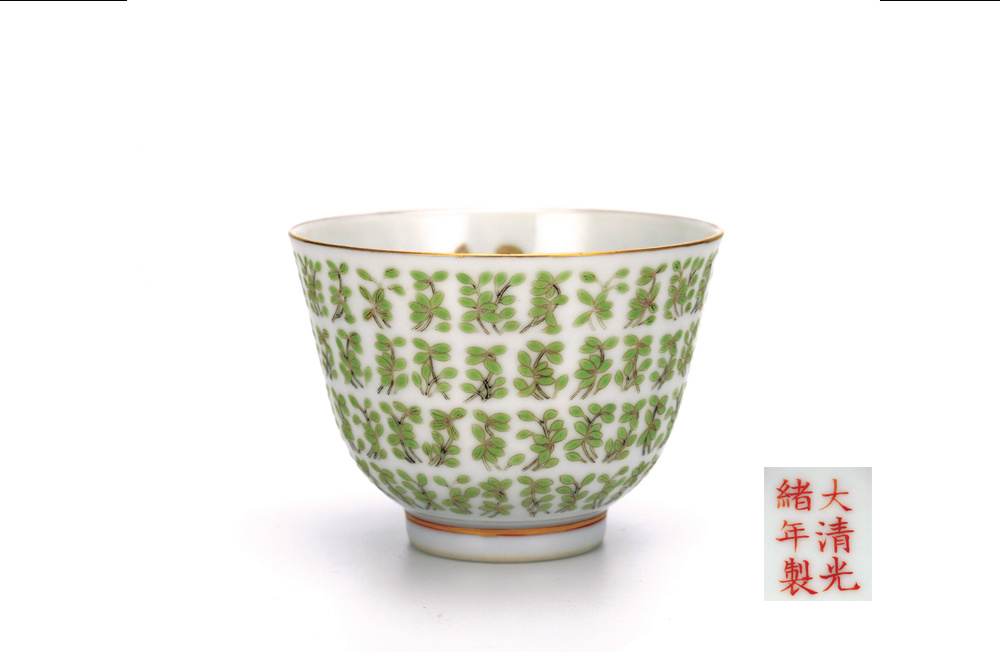
Ningbo Nanyuan Hotel, Fourth Floor, Century Hall (No. 2 Lingqiao Road, Haishu District, Ningbo City)
December 17, 2023, 1:00 PM to 5:00 PM
Waiting for auction
Waiting for auction
Waiting for auction
Inquire
Follow De Rong Auction
Leave your email address to get the latest news from Derong Auction!
© 2023 Zhejiang Derong Auction Co., Ltd. All rights reserved
Contact number:0574-83897862
WeChat ID:Derongpaimai2